
datasheet
-
project
Bordaza Shopping -
year
2026 -
location
Porto Alegre / RS / Brazil -
architecture
SPOL Architects, Roseli Melnick Arquitetura & Interiores, C2 Arquitetos -
landscape
Hanazaki Paisagismo -
photography
Leonardo Krug -
description
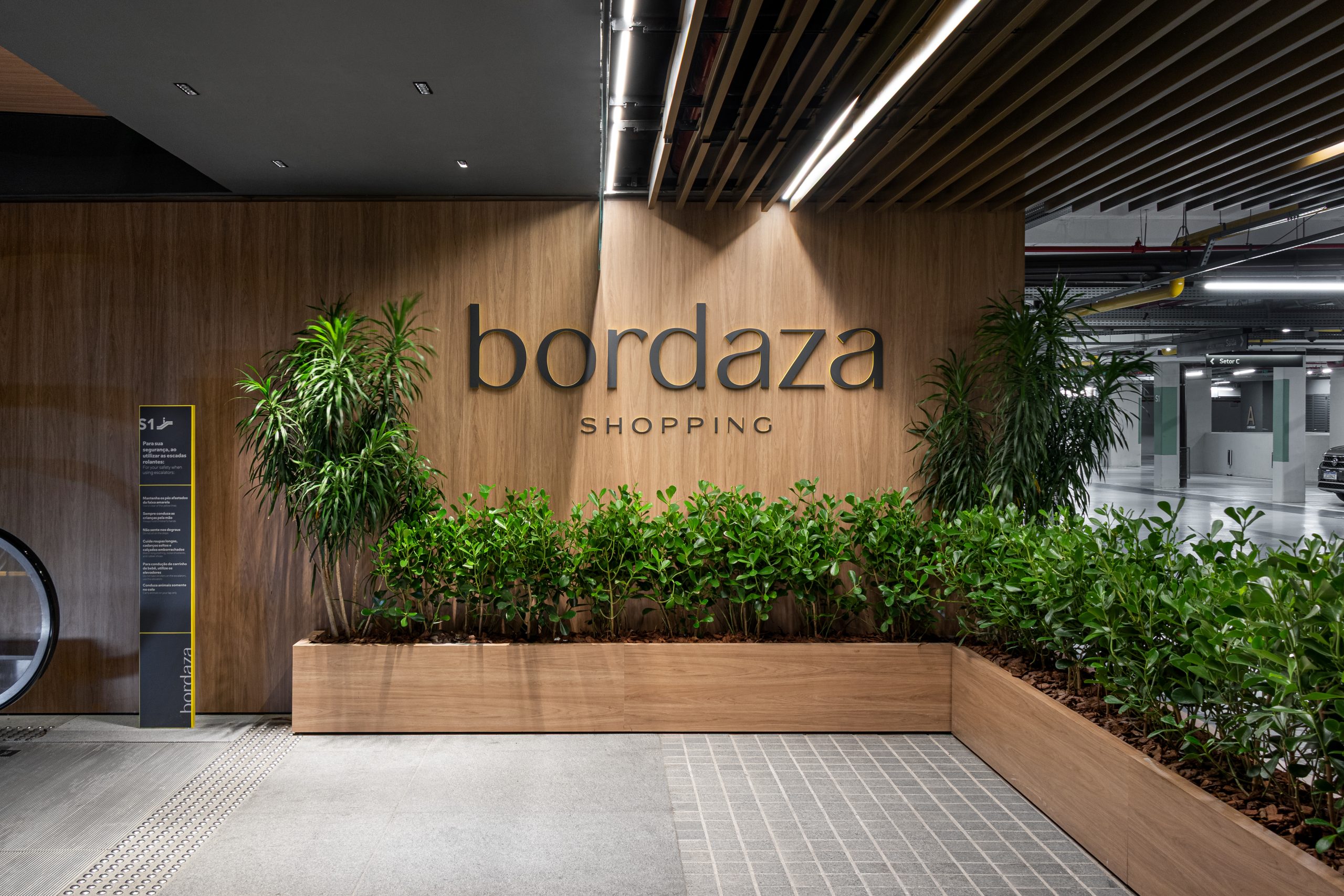
Bordaza Shopping is born from a proposition that challenges the conventional model: rather than reproducing the accelerated logic of large commercial centers, the development integrates the corporate world and family life into an environment that invites pause, where nature, well-being, and curated experiences coexist with practicality. The brand carries a precise intention: to make the journey as enjoyable as the destination. Creating a wayfinding system worthy of this concept was our challenge.
The singularity of the physical space generates a productive tension: the clear geometry of the architecture, with well-defined grids and axes, contrasts with the organic quality of the landscaping, with its free-form planters and winding paths. To understand how people would actually experience this environment, we worked across three structured research phases, wayfinding, user research, and spatial experience design, gathering data in real-world conditions with representative users.
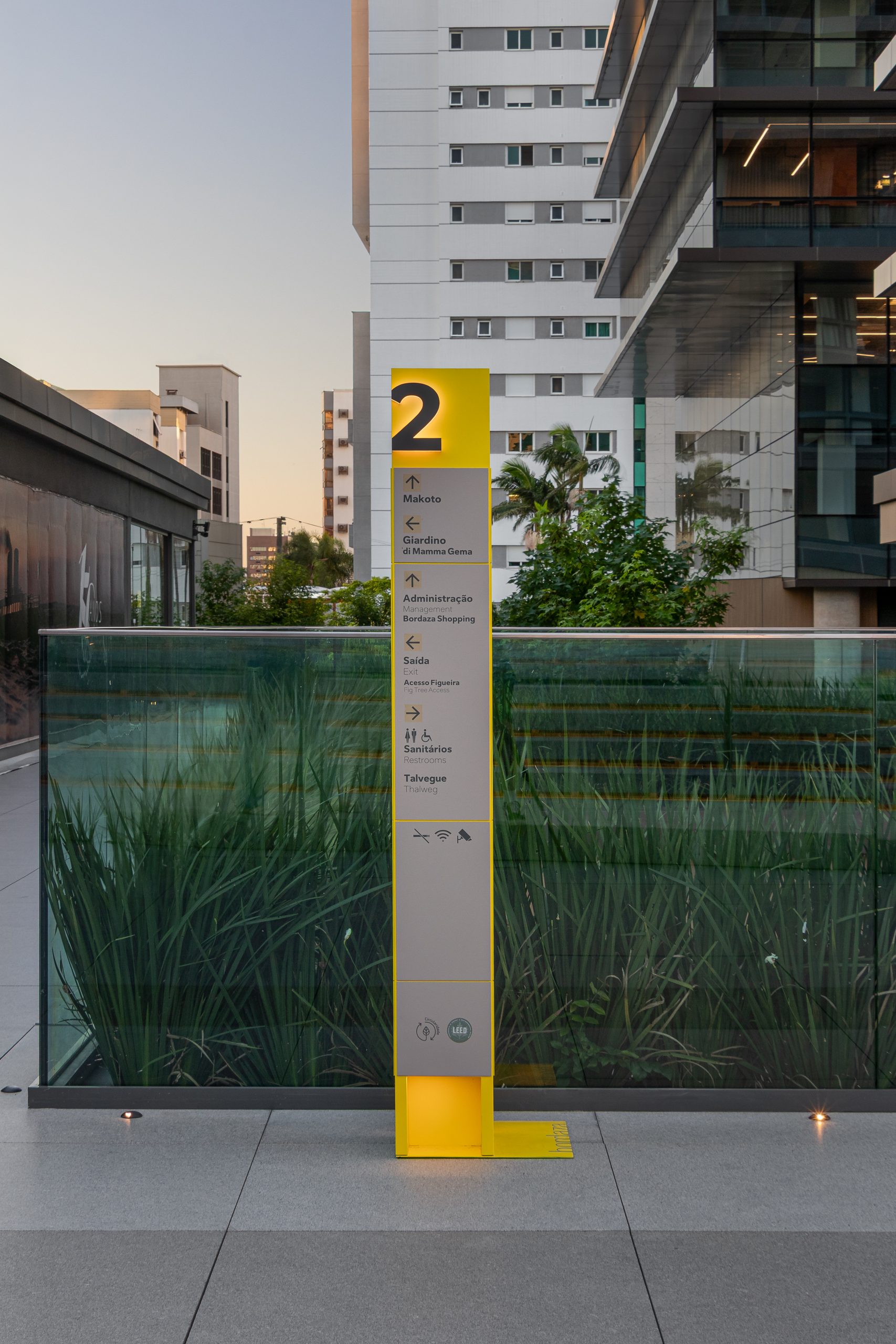
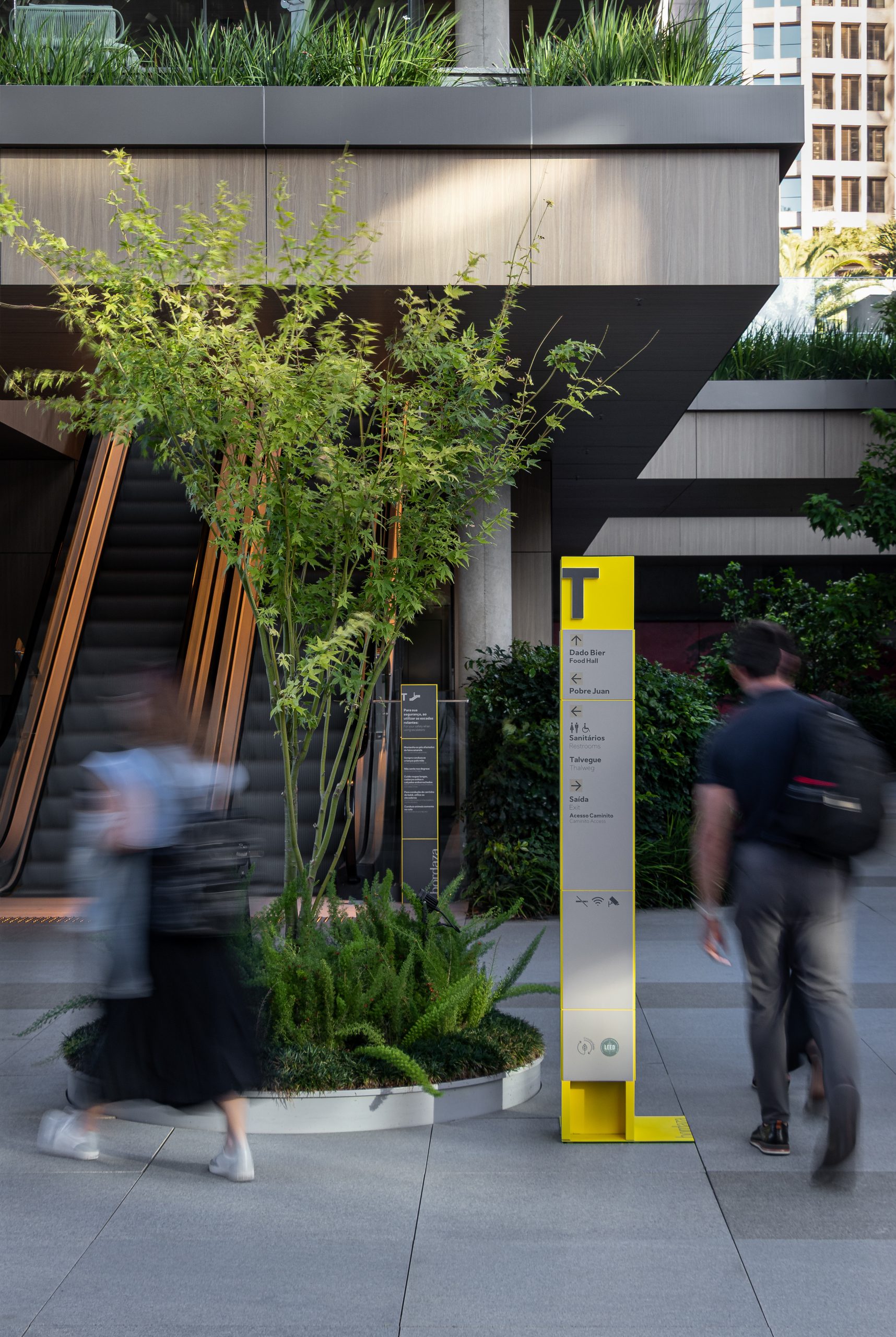
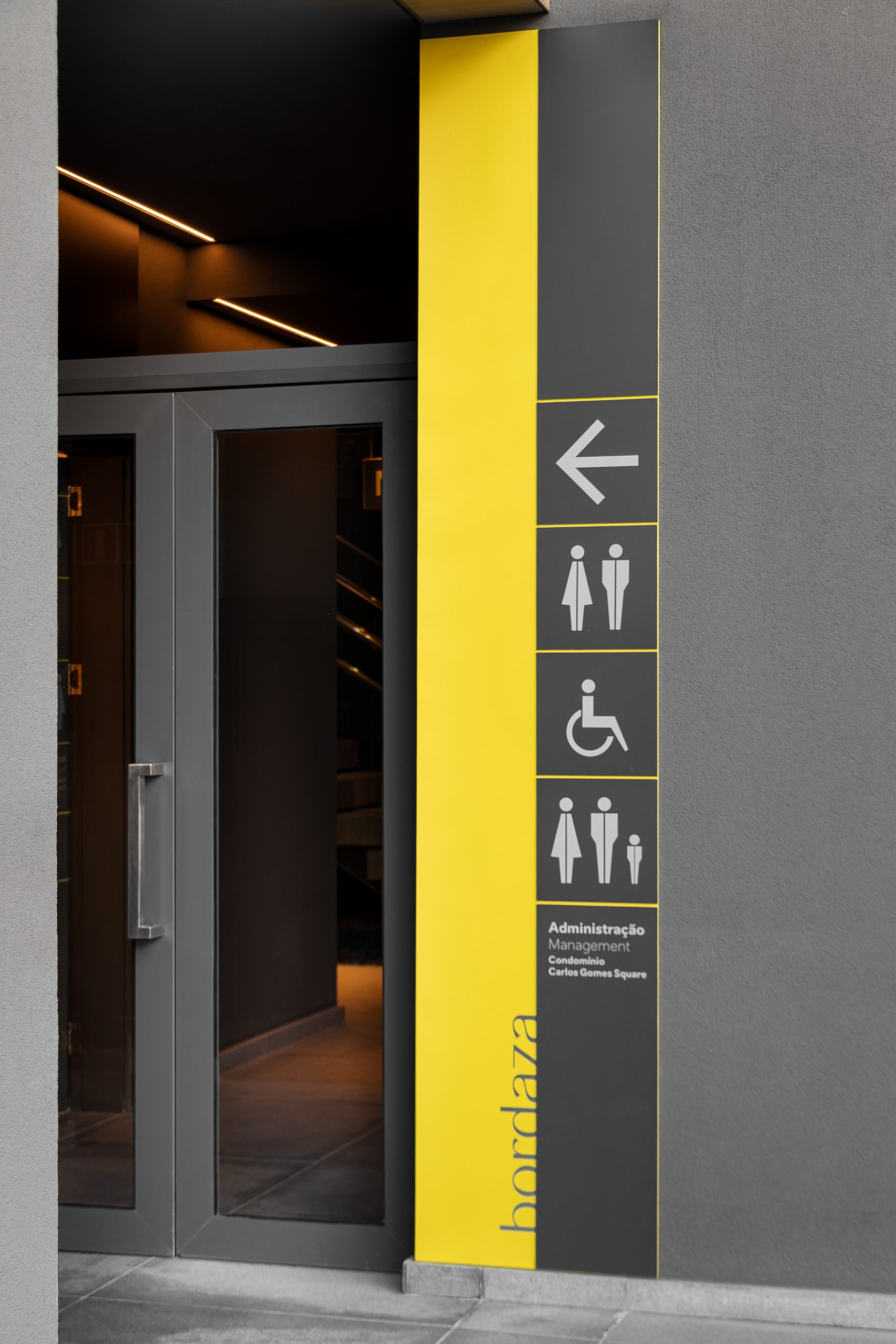
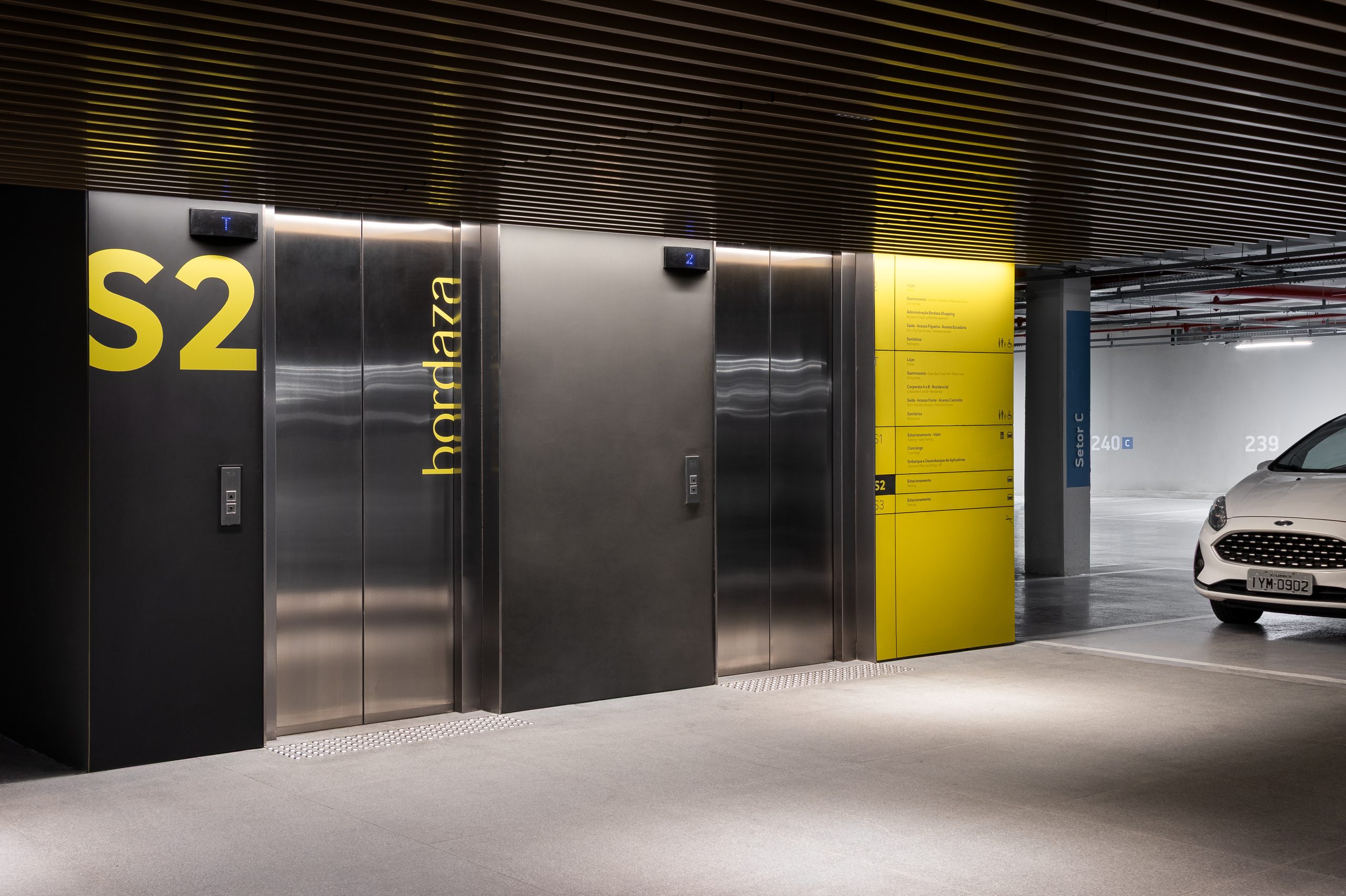
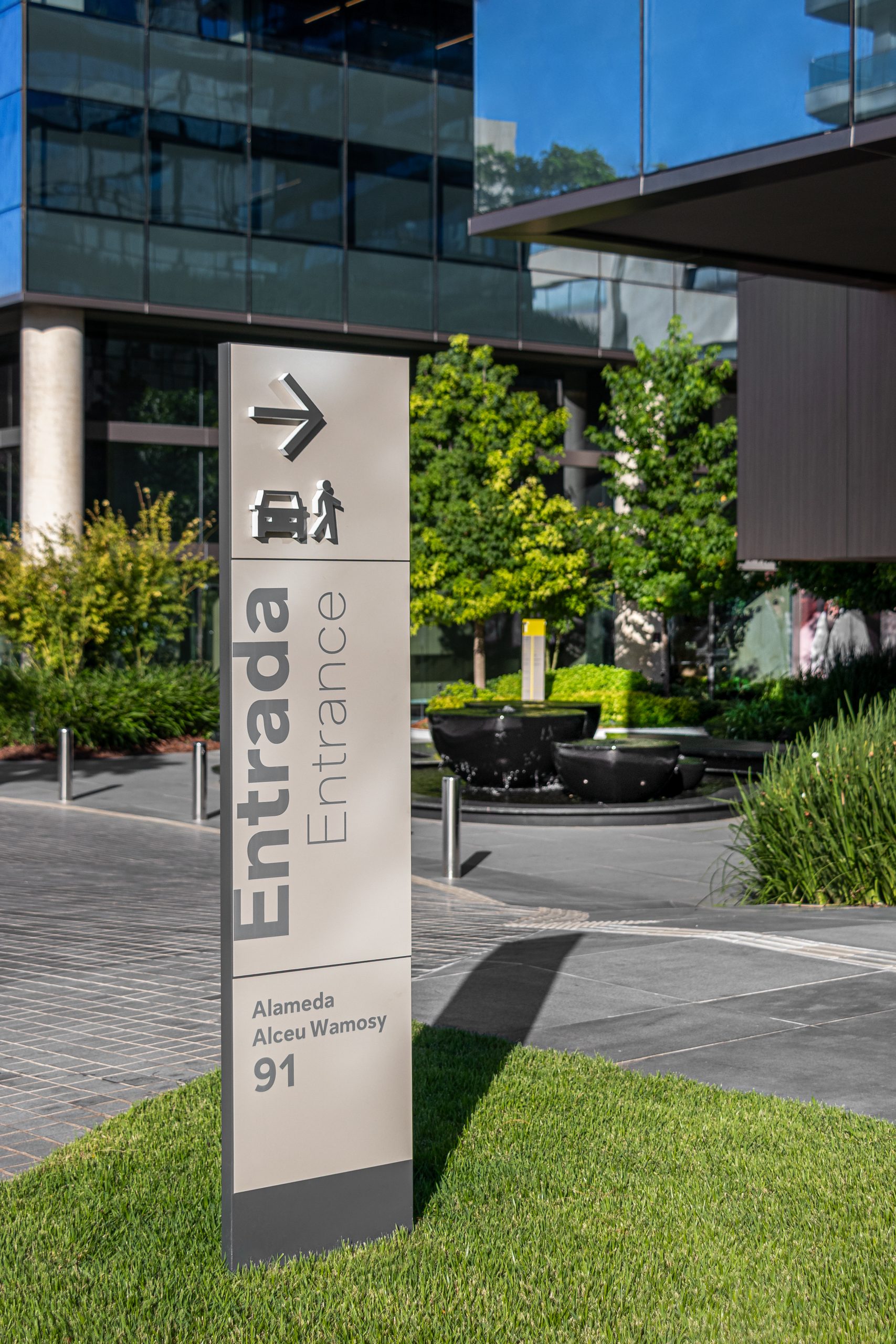
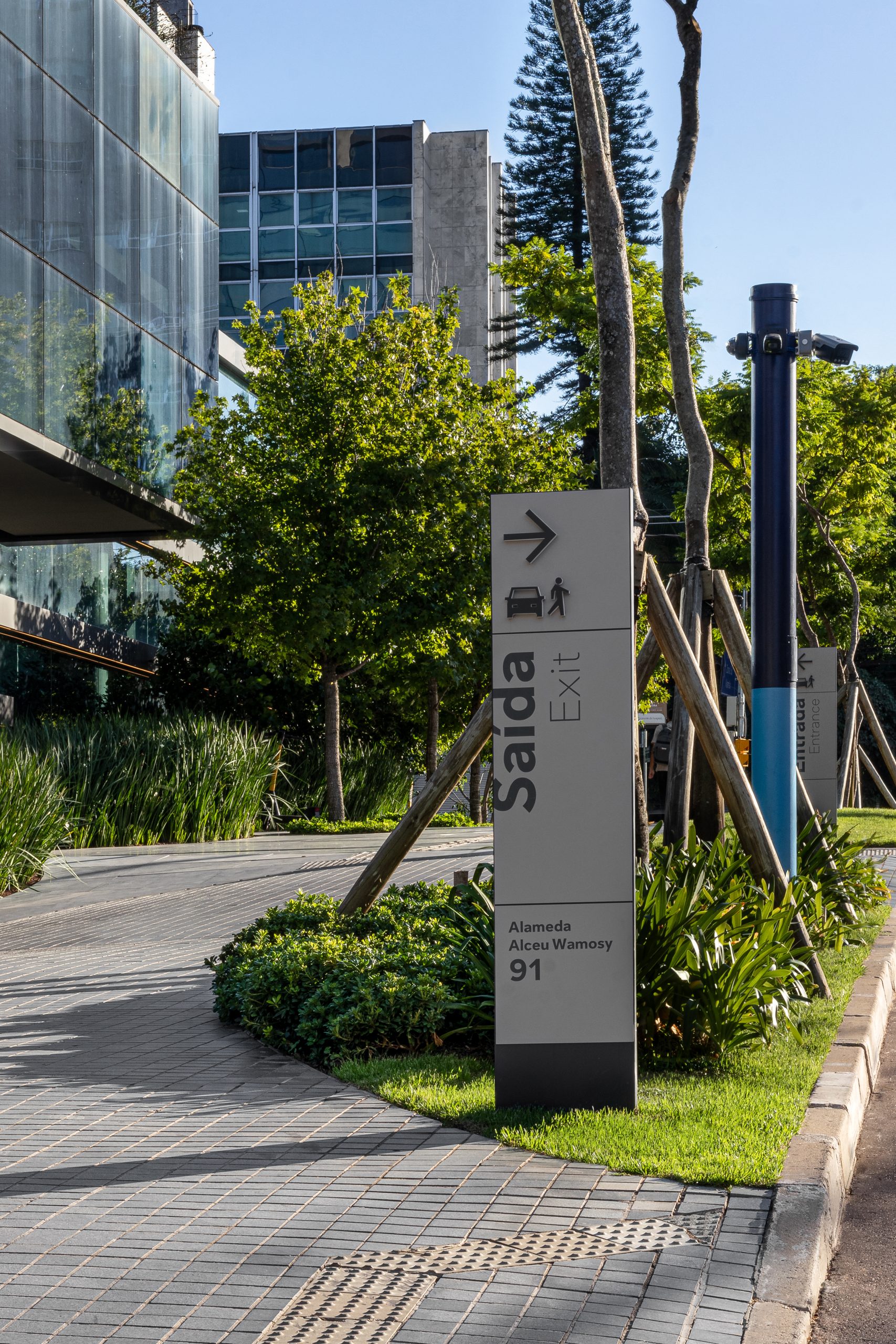
The process revealed a strategic insight: the best orientation angles emerged precisely in contrast with the organic planters. The decision was to decouple the wayfinding system from the landscaping and anchor it to the architecture, walls, floor geometries, and built volumes, ensuring visibility without competing for attention with the surrounding environment.
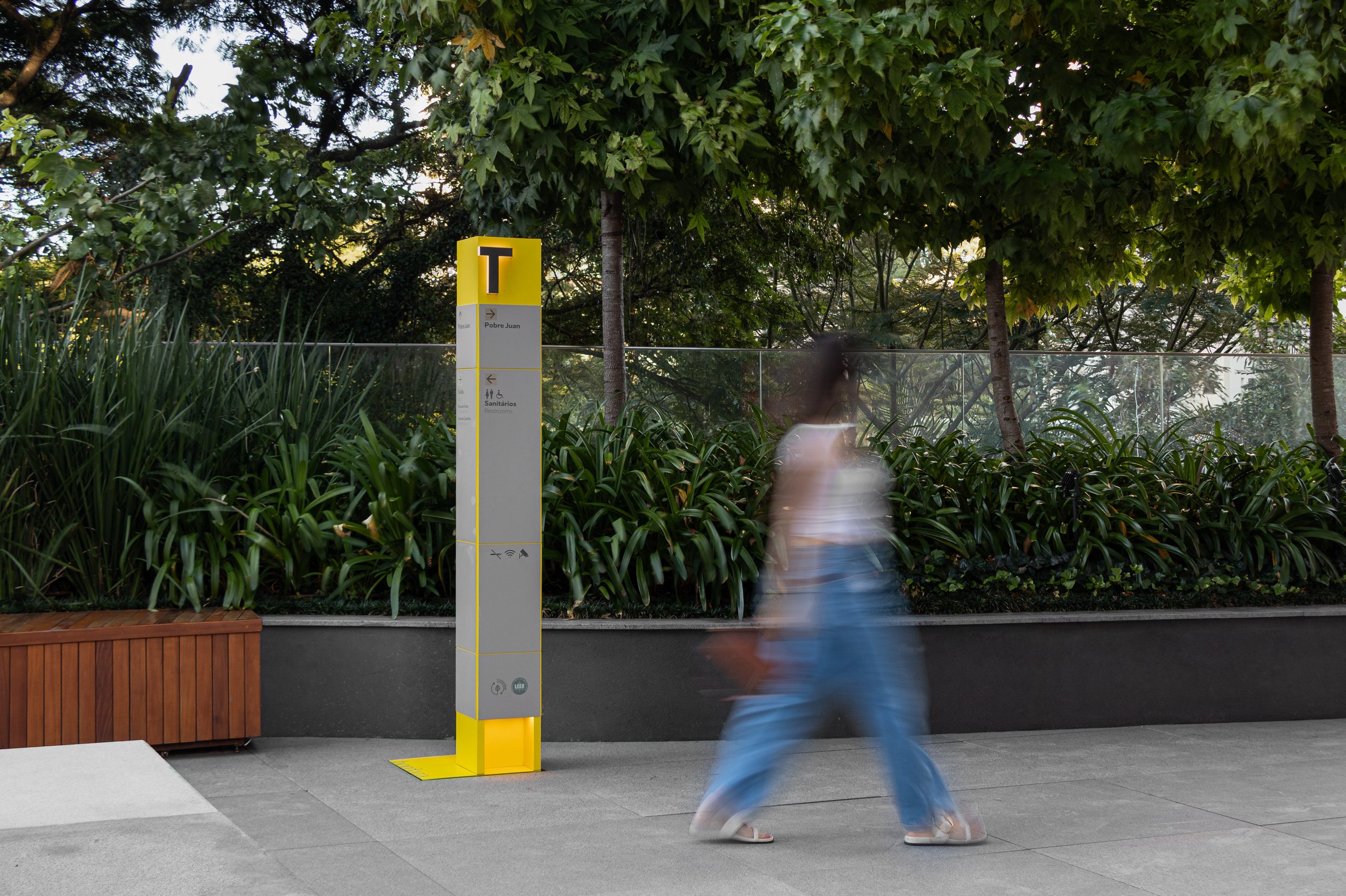
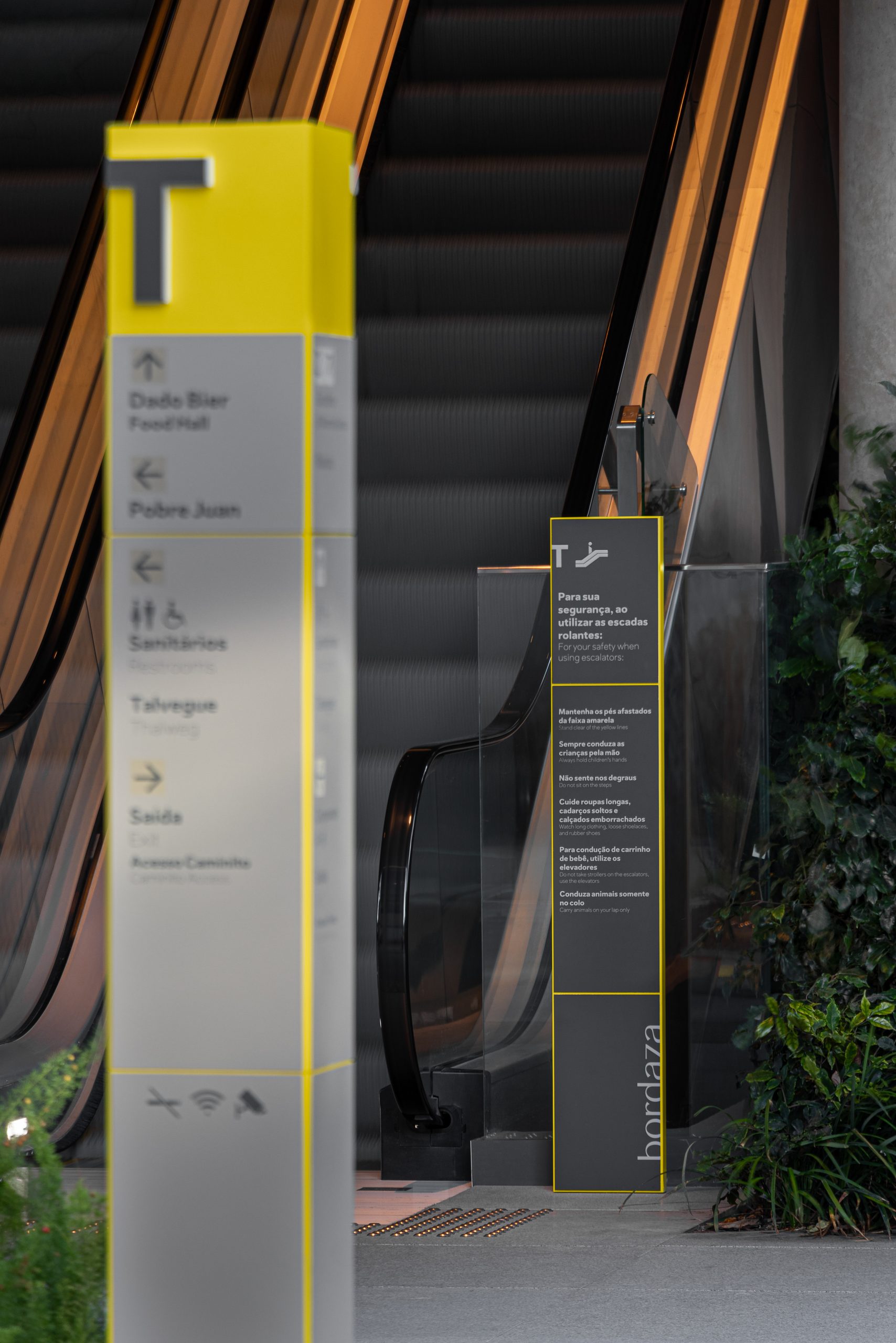
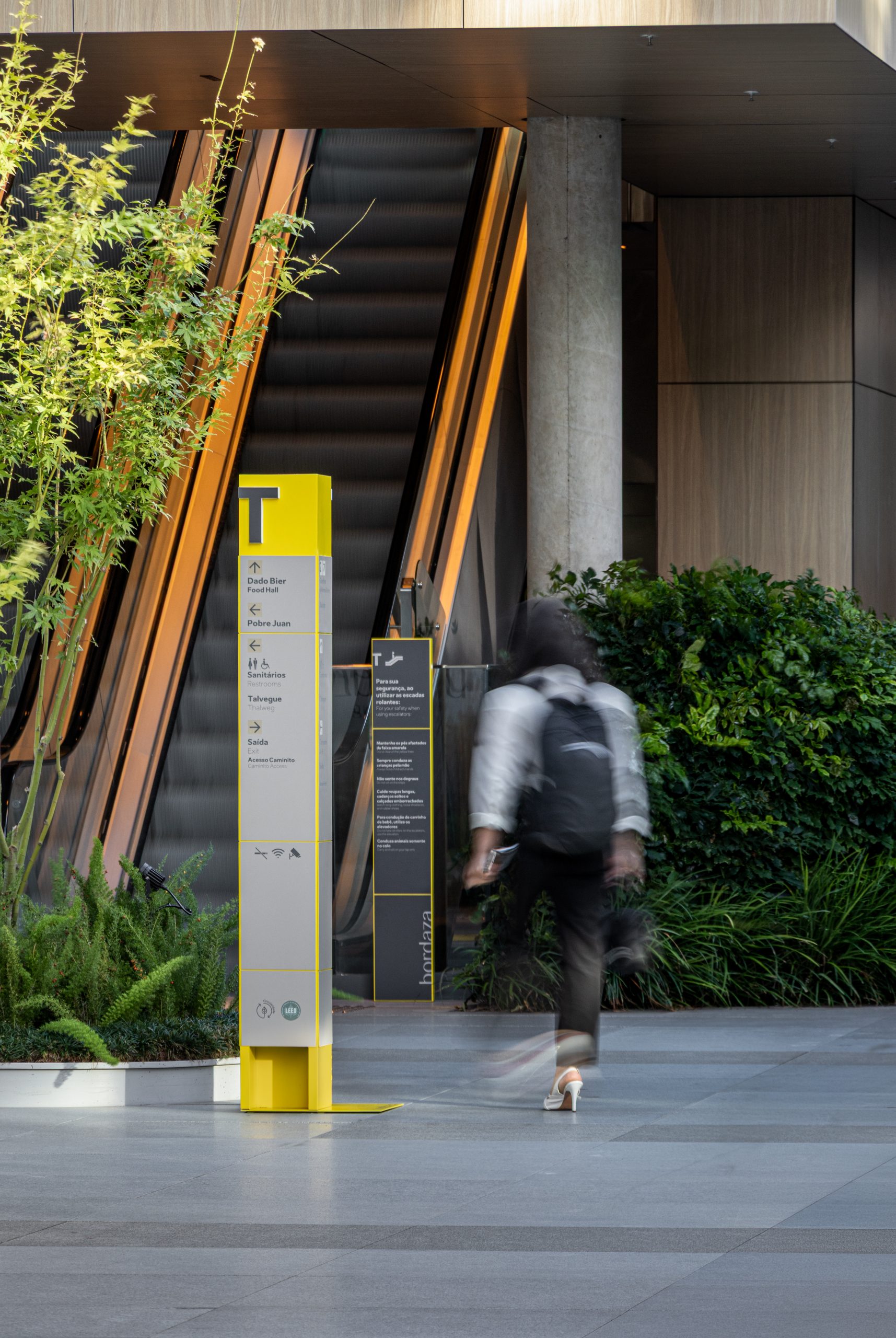
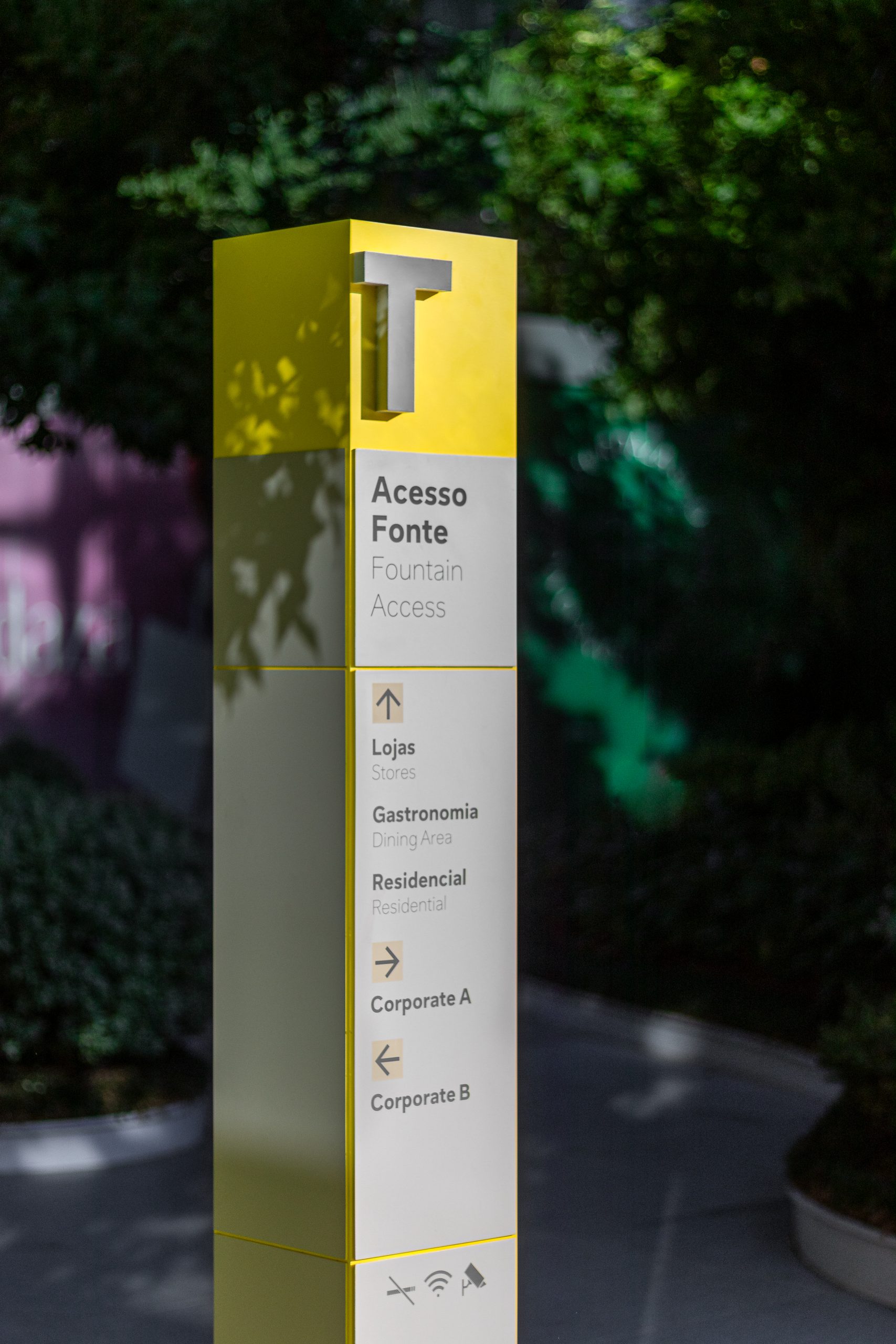
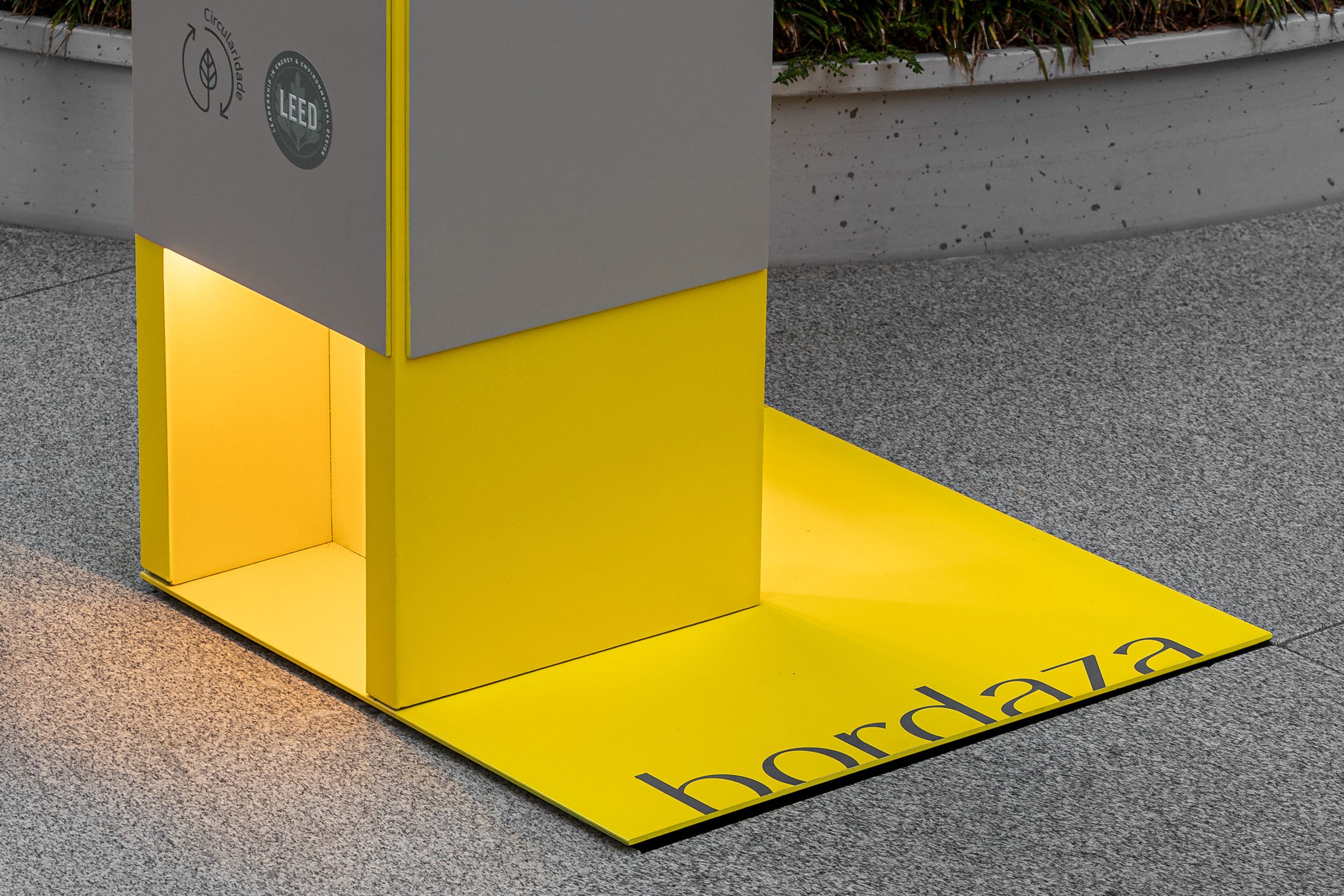
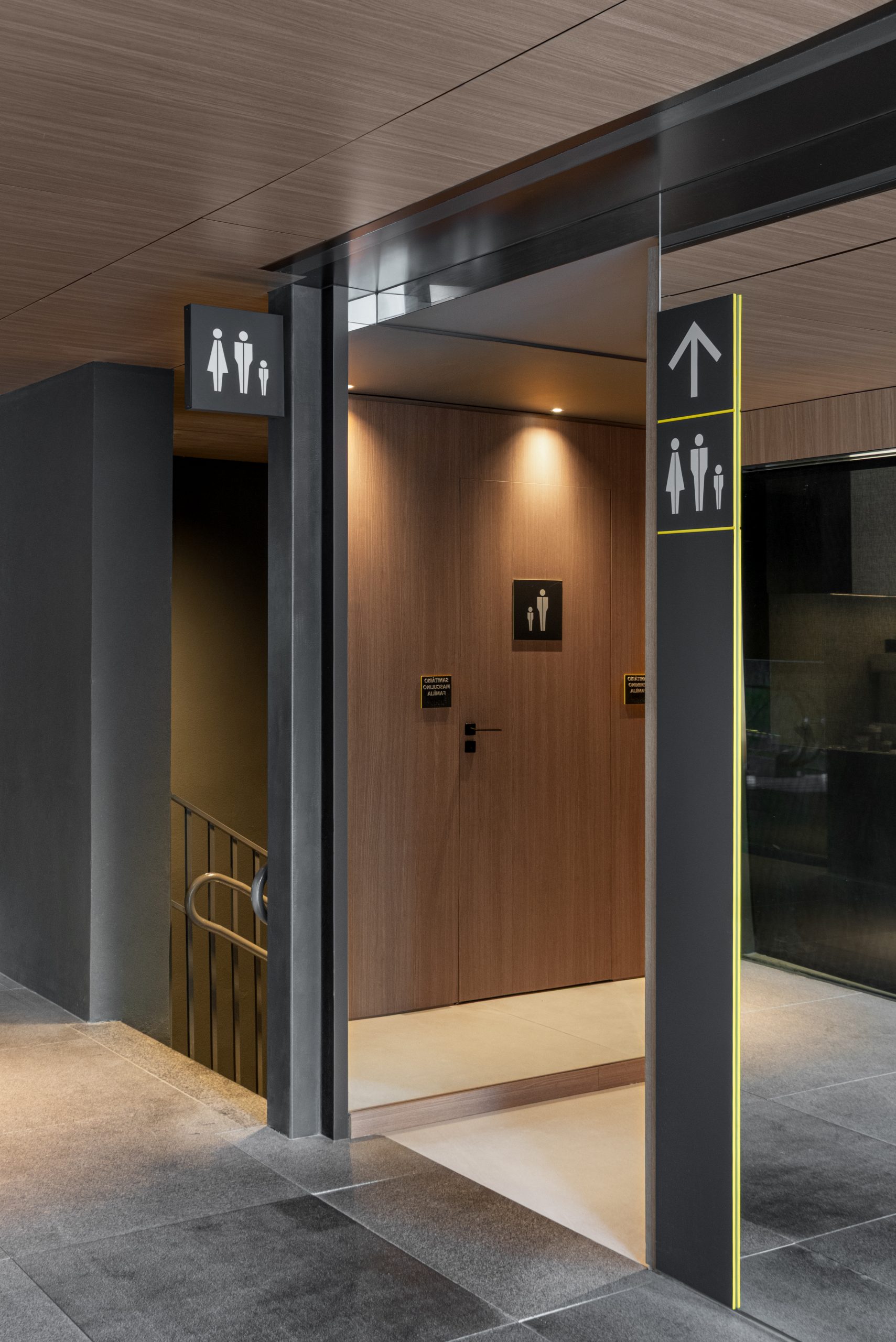
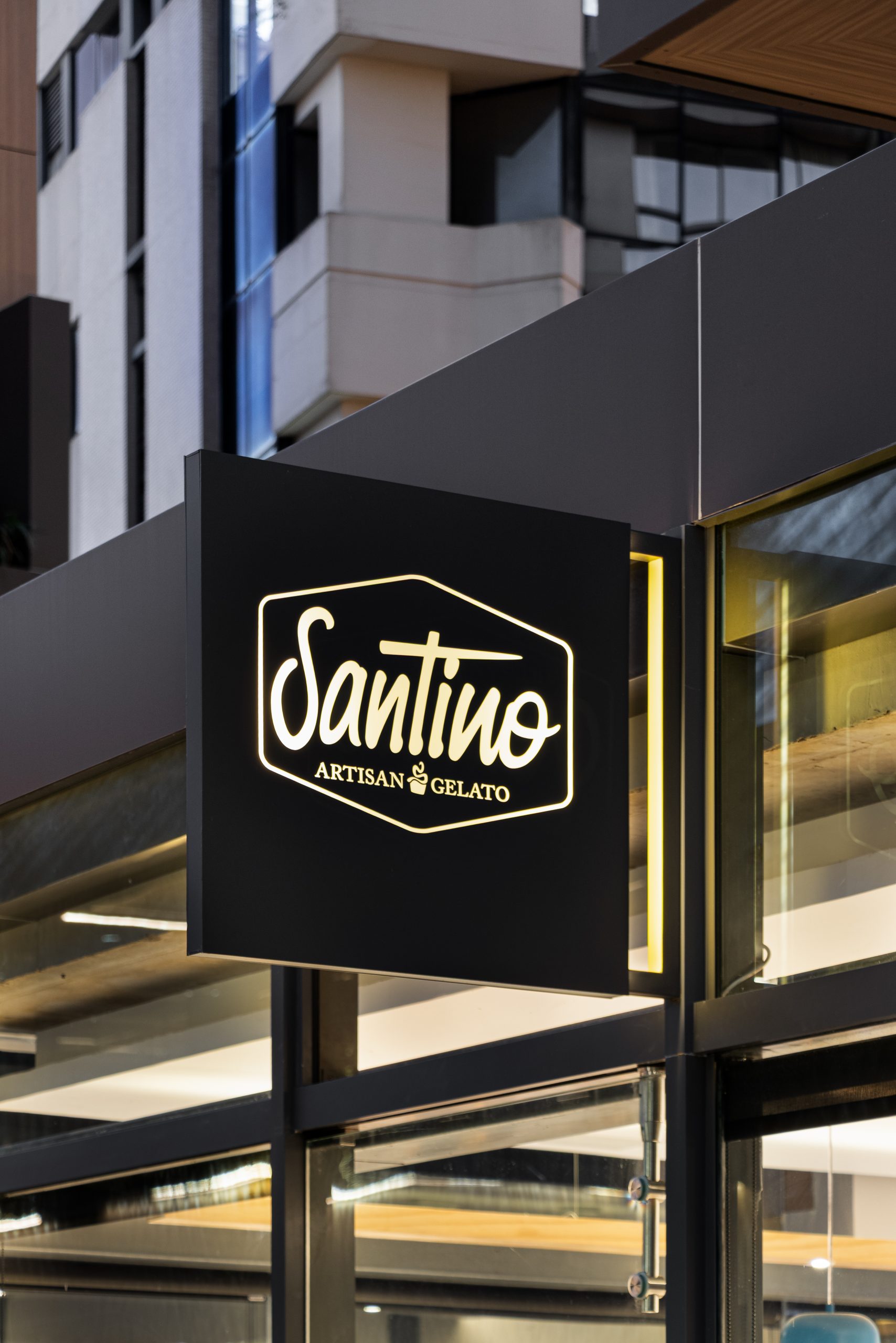
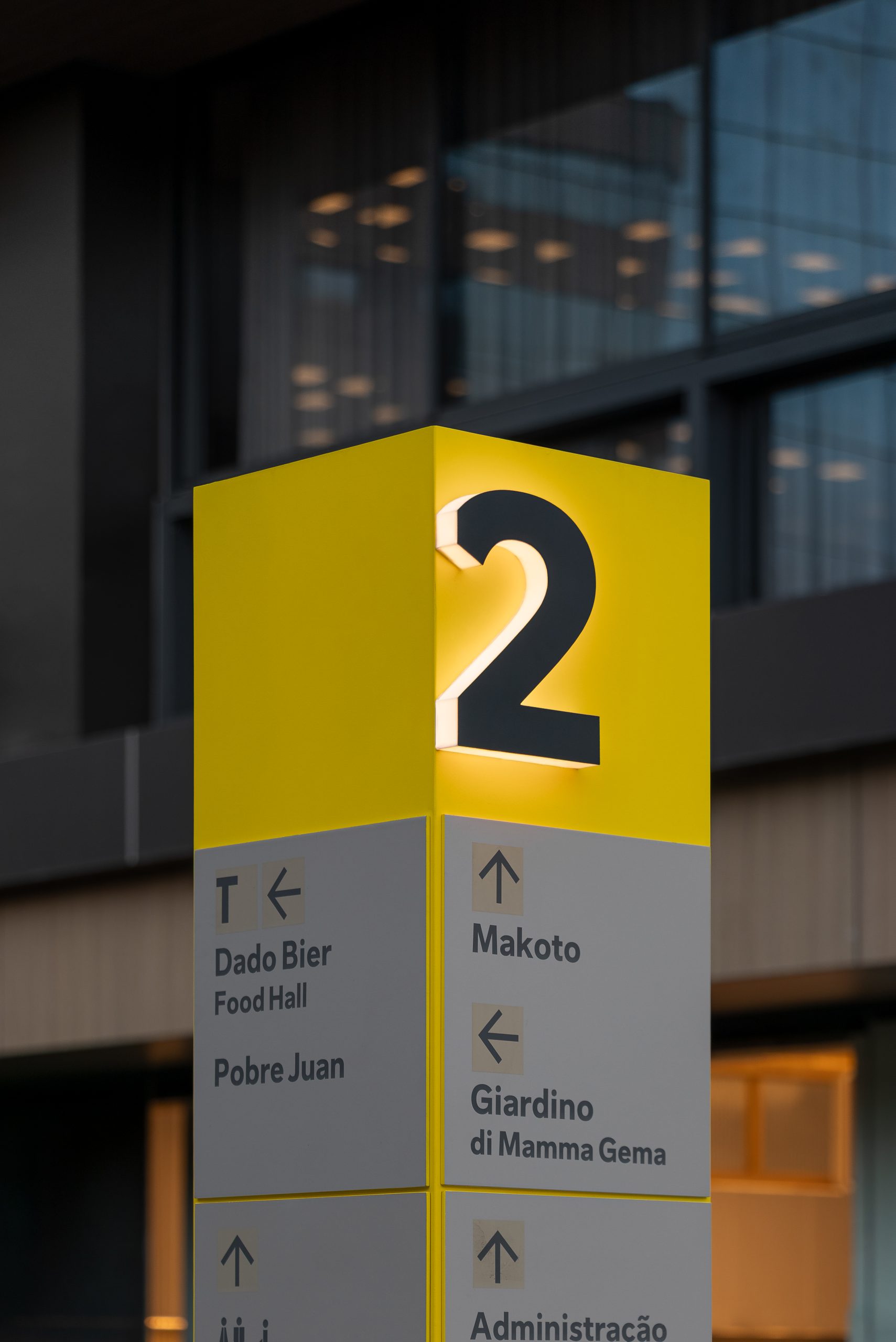
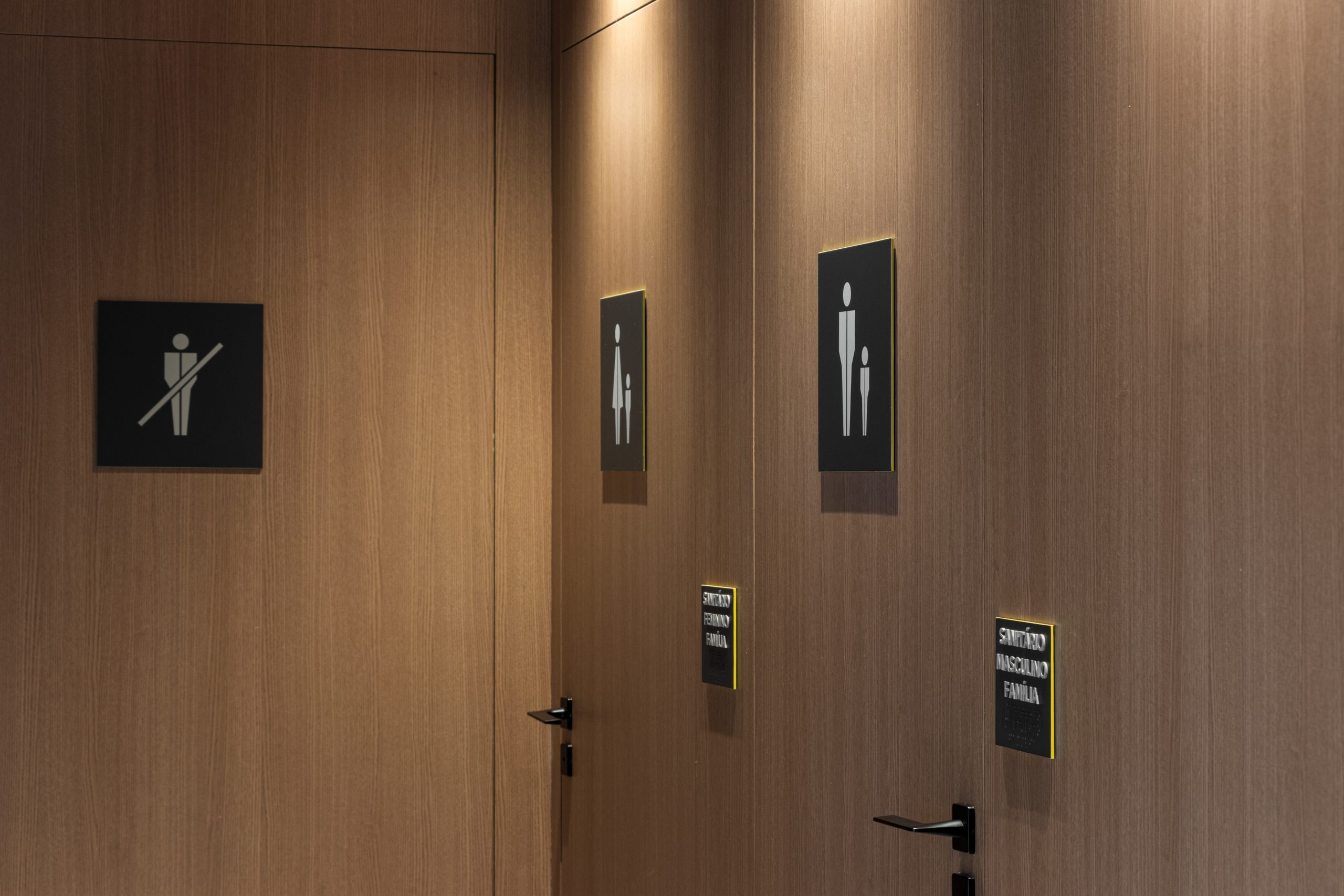
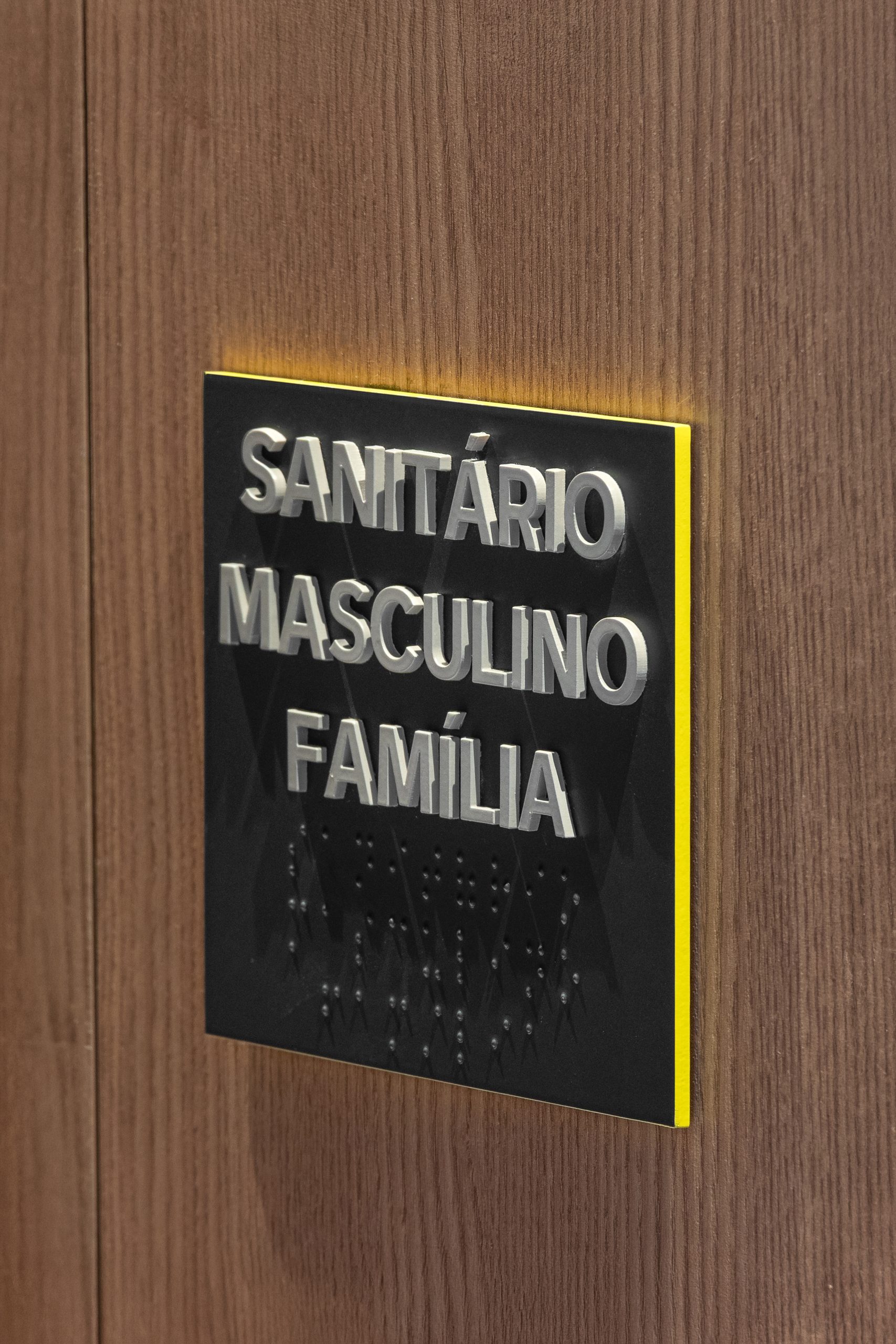
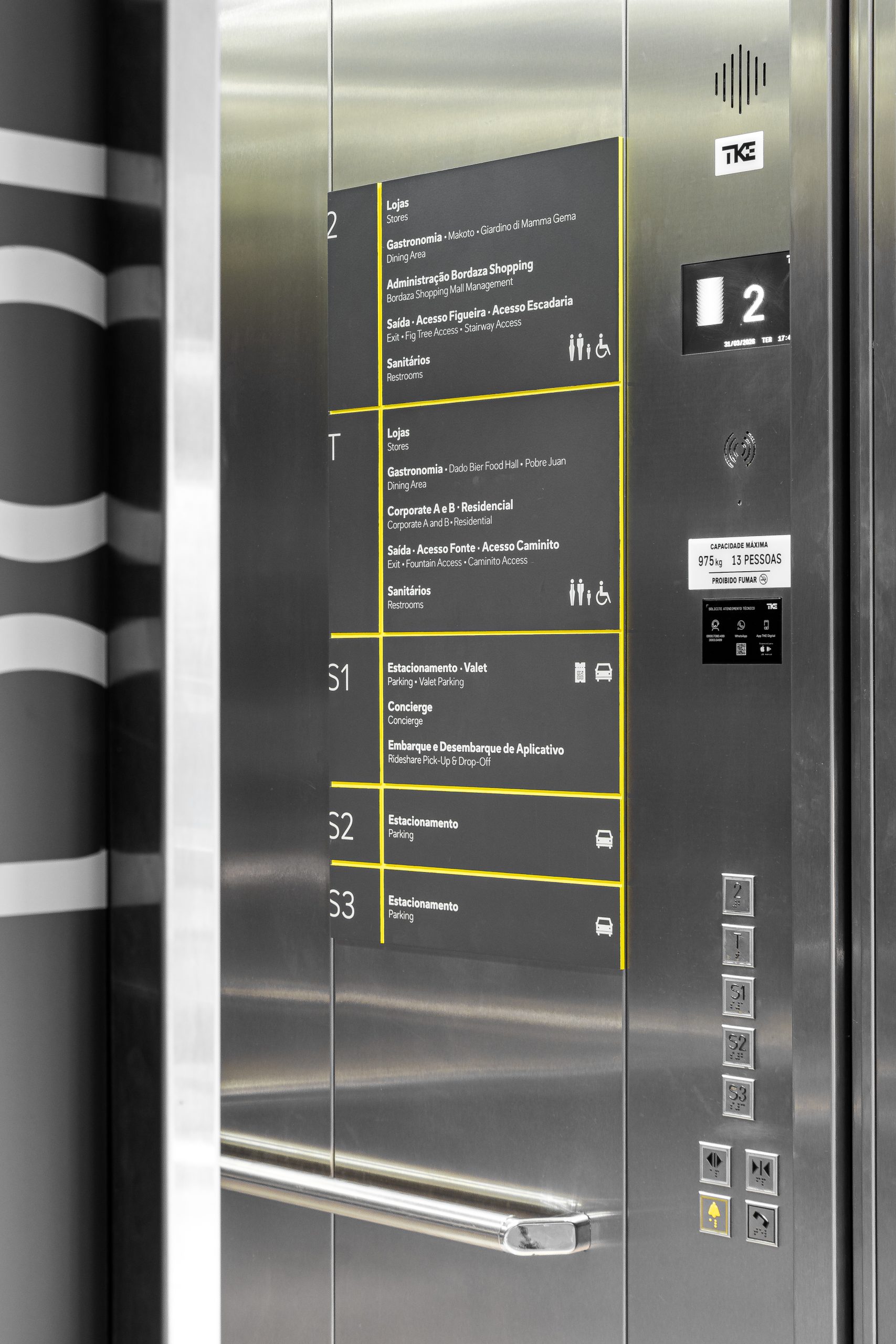
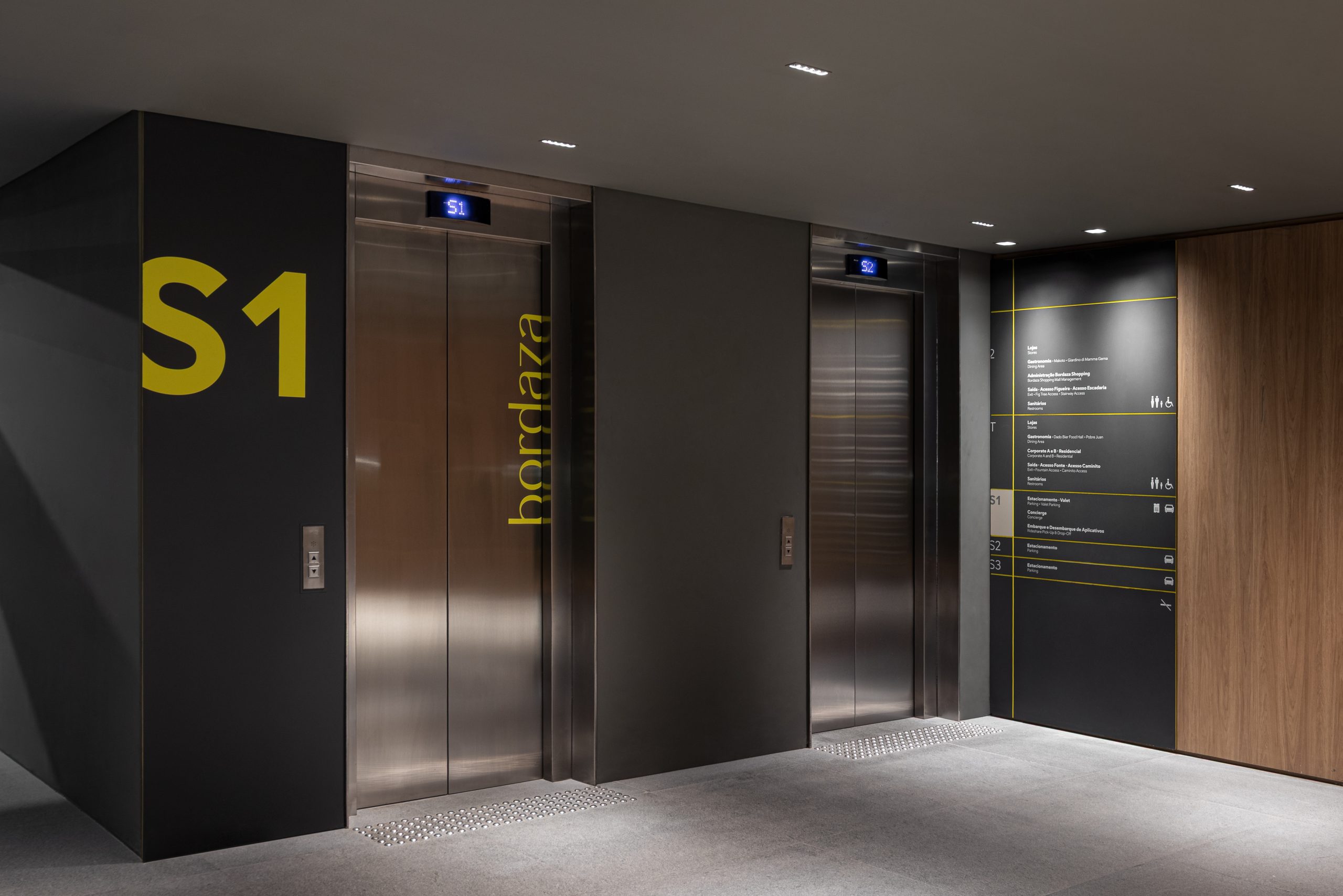
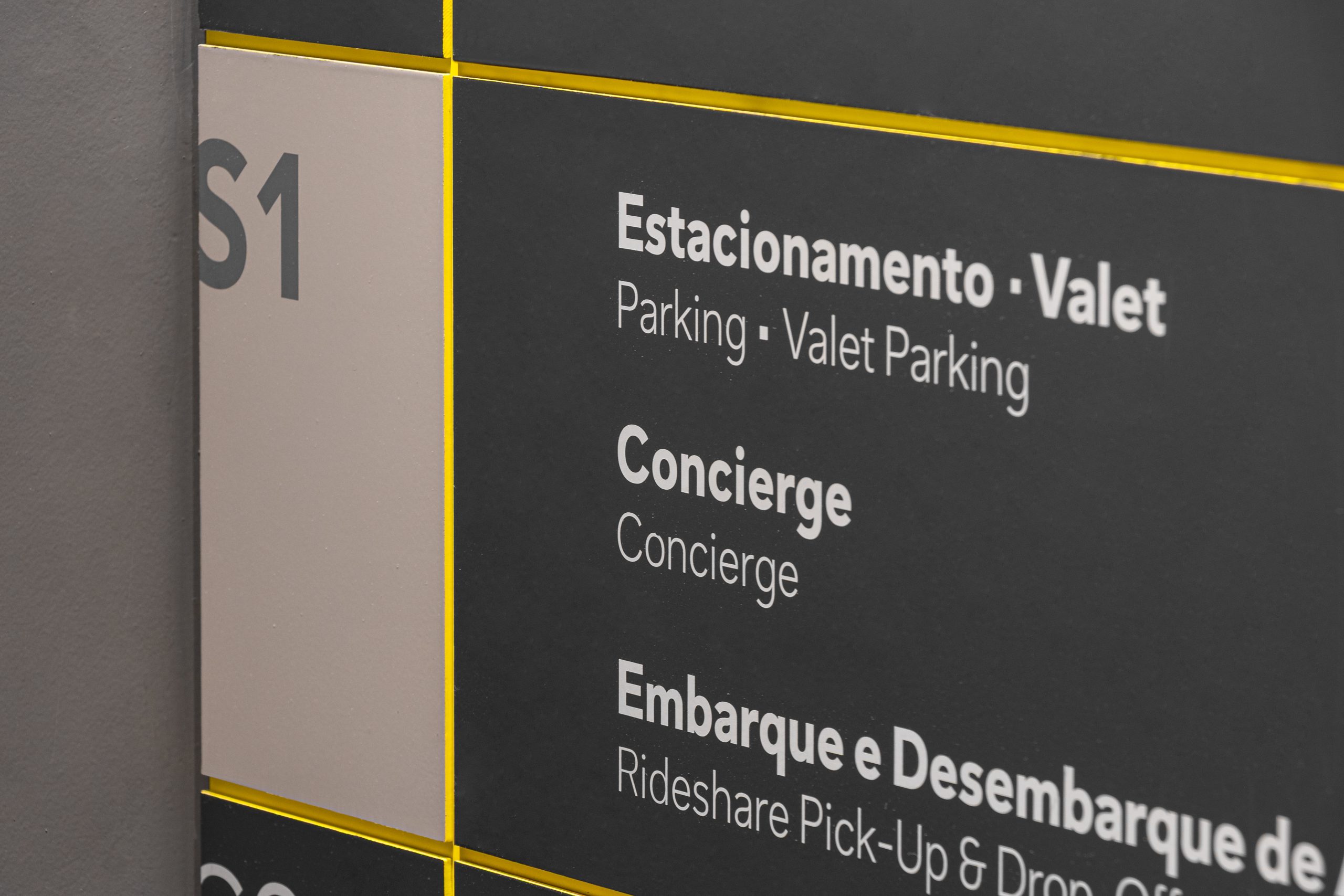
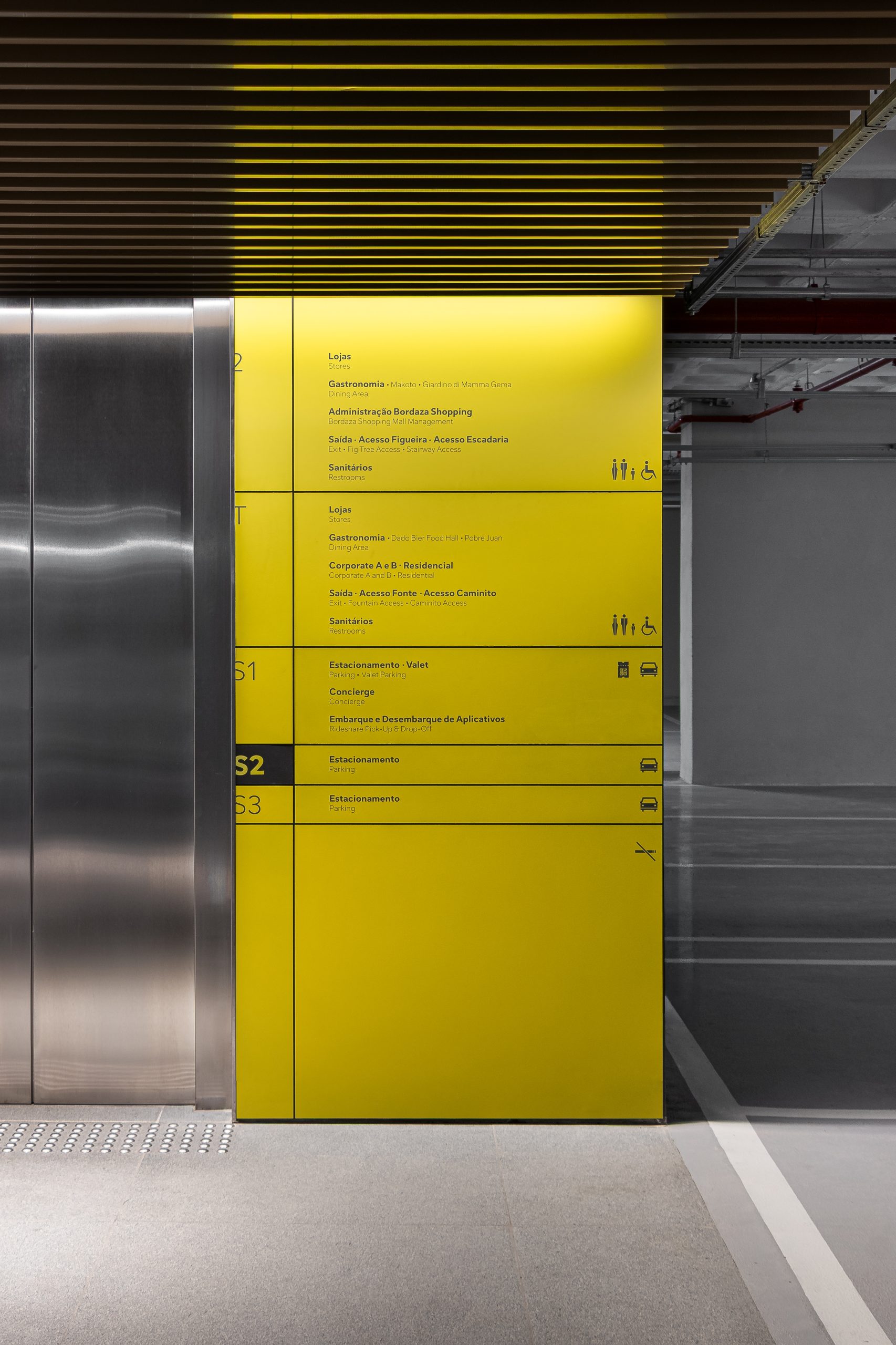
The resulting system is clean, direct, and refined. The brand’s yellow acts as a focal point and connecting thread throughout the entire journey. Informational hierarchy is organized through progressive disclosure, delivering to the user exactly what is needed, at the right moment. Slender, monolithic pieces with four faces and integrated lighting compose a modular system that serves multiple routes and adapts to future changes without losing coherence.
The result is a wayfinding system that belongs to the space. Refined in its details, functional across every route, and aligned with a place where the experience matters as much as the destination.